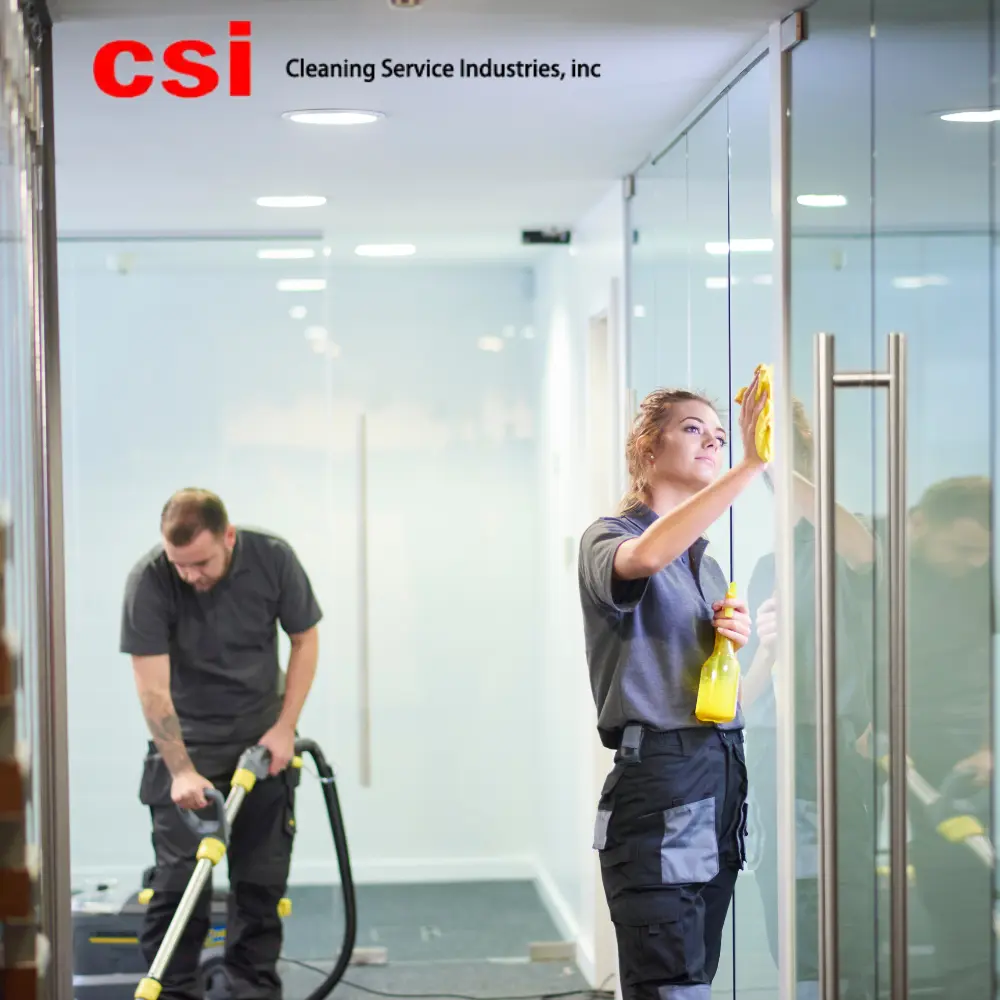
Most office cleaning problems start with a bad scope of work. A company hires a cleaner, agrees to a list of tasks, and assumes the office will stay presentable, sanitary, and functional. Then the same issues keep returning: restroom odor, dirty pantry counters, dusty corners, salt-stained floors, missed trash, fingerprints on glass, and conference rooms that look half-cleaned by midmorning.
That is why commercial office cleaning NYC should not be treated as a list of chores. In New York offices, cleaning has to respond to how people move through the building, which surfaces they touch, which materials need protection, and when work can be done without disrupting business.
Cleaning Service Industries, Inc. has been providing office cleaning service in the NYC commercial market for three generations. We first opened our doors in the early 1950s and describes itself as a full-service building maintenance and office cleaning provider serving the New York, New Jersey, and Connecticut tri-state area. Our employees receive extensive training for different corporate environments and are bonded and covered by workers’ compensation, public liability, and property damage insurance.
Why Do Office Cleaning Checklists Fail?
Office cleaning checklists fail because they describe tasks rather than conditions. They tell a cleaner to vacuum, empty trash, clean restrooms, and wipe surfaces, but they rarely explain which areas are most used, which surfaces need more frequent attention, which materials require special handling, or which problems need to be prevented before they become complaints.
That distinction matters in NYC offices because the building itself creates pressure. Employees and visitors bring in street dust, rainwater, snowmelt, sidewalk grit, elevator grime, food residue, and restroom moisture. A generic checklist does not account for that movement. It treats a private office, pantry, restroom, lobby path, and conference room as if they behave the same way.
They do not.
The front entrance may need more attention to the floor during winter. The pantry may need more detailed work than the rest of the office because food residue, sink moisture, microwave handles, and trash all concentrate in one place. Restrooms may need odor control and floor-edge cleaning, in addition to fixture cleaning. Conference rooms may need to be reset after heavy use. A carpeted hallway may need more than routine vacuuming if traffic lanes are beginning to show.
A better cleaning program starts by asking what fails first.
What Should A Real Cleaning Program Be Built Around?
A real cleaning program should be built around traffic, touch, moisture, material, and timing. Those five factors explain most cleaning complaints more accurately than square footage alone.
- Traffic explains where dirt accumulates. In an office, traffic is not evenly distributed. Entrances, elevator paths, reception areas, restroom routes, pantry access points, and conference room corridors carry far more soil than low-use rooms.
- Touch explains where germs and residue collect. The CDC says high-touch surfaces should be cleaned regularly, while other surfaces should be cleaned when visibly dirty. It also recommends disinfecting when someone is sick or when higher-risk conditions justify it.
- Moisture explains where odors, slip risk, and surface damage begin. Restroom floors, sink areas, wet entry mats, winter slush, umbrellas, and mop closets need more attention because water changes the cleaning problem. OSHA requires walking-working surfaces to be kept clean, orderly, sanitary, and, where feasible, dry.
- Material explains what method should be used. Carpet, marble, wood, upholstery, glass, metal, tile, grout, blinds, and drapery cannot be cleaned as if they were the same surface. We service an extensive list of materials, including carpet shampooing, carpet spotting, upholstery shampoo, wood floor refinishing, waxing, window cleaning, wall washing, light fixture cleaning, air conditioning duct cleaning, marble polishing and restoration, Venetian blind cleaning, drapery cleaning, exterior metal maintenance, and construction clean-ups.
- Timing explains when the work should happen. Some tasks belong nightly. Some belong during the day. Some are weekly, monthly, seasonal, or issued after an emergency. Our services are tailored to building cleaning, offices, showrooms, construction, and initial clean-up services, and that it offers 24-hour emergency office cleaning.
The Office Cleaning Failure Map
This is the simplest way to diagnose whether a cleaning plan is real or just cosmetic.
Failure Point |
What It Usually Means |
Scope Fix |
Restroom odor |
Moisture or floor-edge neglect |
Odor standard |
Pantry grime |
Food residue buildup |
Touchpoint reset |
Dusty edges |
Poor detail rotation |
Weekly detail work |
Salt-stained floors |
Seasonal underplanning |
Winter floor plan |
Dirty handles |
Weak touch protocol |
High-touch schedule |
Worn carpet lanes |
Traffic mismatch |
Periodic extraction |
Missed trash |
Scope or supervision issue |
Route audit |
The value of professional cleaning is not that someone “does more.” The value is that the cleaning company understands why specific failures keep returning and adjusts the scope before the office manager has to keep complaining.
Why Is “Wipe Surfaces” Too Vague?
“Wipe surfaces” is too vague because not every surface carries the same level of use, residue, or health concern. A decorative shelf in a private office does not need the same attention as a refrigerator handle, faucet handle, shared phone, conference table, or restroom fixture.
This is where many office cleaning scopes become weak. They use broad language that sounds complete but cannot be measured. “Clean bathrooms” is not a standard. “Wipe down pantry” is not a protocol. “Vacuum floors” does not address entry mats, carpet edges, traffic lanes, salt, moisture, or spot cleaning.
The ISSA Value of Clean white paper gives a more concrete reason to separate surface types. It reports that a Wash, Wipe, Sanitize protocol reduced the probability of common cold and influenza infection by approximately 80 percent, reduced virus-contaminated surfaces by 62 percent, and reduced absenteeism by as much as 46 percent.
That does not mean every office needs aggressive disinfecting every night. The stronger point is more practical: cleaning should be targeted. High-touch areas, visible soil, illness events, and higher-risk spaces should drive the cleaning plan.
What We Do Differently
Office cleaning is building maintenance, not housekeeping. Here at CSI, we have more than 60 years of commercial office cleaning experience in New York, offer customized services tailored to each facility, and consider regular or nightly office cleaning essential to maintaining a professional company image.
We do not just clean visible mess. We help office managers address recurring conditions that make an office feel neglected: restroom breakdowns, pantry residue, floor deterioration, visible dust, dirty glass, and poor after-hours accountability.
That matters because office managers are not only buying labor. They are buying fewer complaints, fewer interruptions, cleaner client-facing spaces, safer walking surfaces, and a vendor that can handle more than the nightly basics.
What Should A Cleaning Scope Include?
A useful commercial cleaning scope should be specific enough that both the office manager and the cleaning company know what success looks like. The plan should explain the baseline nightly tasks, the high-touch cleaning protocol, the restroom standard, the floor-care schedule, the specialty-surface plan, and the communication process for exceptions.
At a minimum, a serious scope should define:
- Nightly basics: Trash, restrooms, pantry, floors, visible surfaces, supply checks.
- High-touch points: Handles, switches, phones, shared desks, counters, fixtures, conference tables.
- Restroom standard: Fixtures, partitions, mirrors, floors, trash, supplies, odor sources.
- Floor care: Entry mats, salt, grit, traffic lanes, spot cleaning, periodic deep cleaning.
- Specialty surfaces: Marble, wood, upholstery, glass, metal, blinds, drapery.
- Communication: Who reports issues, who fixes misses, who adjusts the scope.
This is where our training and insurance credentials set us apart from other office cleaning services. Our employees undergo extensive training to learn how to clean various corporate environments, and we are bonded and insured. That is not filler. It helps answer a real buyer concern: who is inside the office after hours, around expensive materials, electronics, documents, furniture, and building access points?
When Should An Office Replace Its Cleaning Checklist?
An office should replace its cleaning checklist when the same conditions keep returning after service has been completed. A one-time miss is a mistake. A recurring problem is evidence that the scope does not match the office.
If restrooms smell clean only in the morning, the restroom standard is weak. If pantry counters look wiped but appliances feel dirty, the touchpoint protocol is incomplete. If floors look worn halfway through winter, the floor-care schedule is too light. If dust collects around vents, baseboards, and furniture edges, the detail rotation is not working. If employees keep complaining about the same areas, the issue is not communication alone. The scope is probably wrong.
A better plan does not start with “more cleaning.” It starts with a better diagnosis.
Talk to CSI about A Cleaning Plan Built Around Your Office
A professional office cleaning plan should reduce the number of problems an office manager has to chase. It should define what needs daily attention, what needs periodic detail work, what materials require specialized care, and how the cleaning company responds when the office changes.
We bring a practical foundation to that work: three generations in the NYC commercial market, roots dating back to the early 1950s, trained and insured employees, customized facility services, emergency office cleaning, janitorial services, marble restoration, and a broader list of building maintenance services.
For New York businesses that need office cleaning, janitorial service, emergency cleaning, marble restoration, or a customized building maintenance plan, call 212-736-5200 to speak with Cleaning Service Industries, Inc.
