Commercial office cleaning NY should fit the way an office works. Employees need a clean workplace, clients need a professional first impression, and office managers need a service plan that does not interrupt meetings, calls, private work, or daily operations. For New York businesses, this means cleaning should be planned around the workday rather than added as a generic afterthought. CSI Cleaning helps companies plan recurring commercial office cleaning around reception areas, conference rooms, restrooms, breakrooms, desks, private offices, shared rooms, and after-hours access needs.
Office cleaning has a different rhythm than general janitorial service. A professional office has workstations, meeting rooms, visitor-facing areas, documents, equipment, private offices, and employee routines. The provider needs to know what should be cleaned, what should not be moved, and when service should be scheduled to create the least disruption. A strong plan makes the office feel ready for daily work without making cleaning feel intrusive.
Why Commercial Office Cleaning in NY Should Match Daily Use
Office cleaning should start with how people use the space during the day. Reception areas may need to look ready before visitors arrive, conference rooms may need attention after meeting-heavy days, and breakrooms may need more frequent care when staff use them throughout the workweek. Restrooms, shared tables, counters, door handles, and office entry points also carry more use than low-traffic rooms. The right cleaning plan should focus more attention on areas where the office sees more activity.
CDC guidance says high-touch surfaces should be cleaned regularly and other surfaces should be cleaned when visibly dirty. In an office, this supports defined attention for door handles, reception counters, conference tables, breakroom surfaces, restroom touchpoints, shared equipment areas, and similar spaces. It also supports cleaning based on use, not a one-size checklist. For office managers, the practical takeaway is simple: the schedule should match how the workplace operates.
The workday matters because timing affects both service quality and staff experience. Cleaning the wrong window may interrupt meetings or create awkward access issues around desks and private offices. Cleaning too late or too rarely may leave reception areas, restrooms, or conference rooms looking unprepared. A better plan accounts for employee schedules, client visits, hybrid office patterns, and the rooms people rely on most.
Areas That Affect Employees, Clients, and Meetings
The most important office areas are usually the spaces tied to presentation, comfort, and readiness. Reception areas shape the first impression for clients, vendors, candidates, and guests. Conference rooms need to be ready for internal meetings and client conversations. Breakrooms, restrooms, shared corridors, and work areas affect how employees experience the workplace every day.
Office indoor conditions also depend on more than cleaning alone. EPA’s office building indoor air quality guide explains that good indoor air quality depends on cooperation between building management and occupants. Cleaning supports this shared environment by helping control visible dust, clutter, surface buildup, odors, and product-use concerns. Still, it should not be framed as a standalone fix for air quality. For an office cleaning plan, the best use of this guidance is to support coordination among managers, occupants, and cleaning teams.
| Office Area | Cleaning Focus | Workday Planning Point |
| Reception area | Floors, counters, entry glass, seating areas, and visible surfaces | Should be ready before clients, vendors, or candidates arrive |
| Conference rooms | Tables, chairs, floors, trash, and presentation surfaces | Should align with meeting-heavy days and client visits |
| Desks and workstations | Trash removal, floor care, and agreed surface attention | Should respect personal items, documents, and workstation boundaries |
| Private offices | Floors, waste removal, visible surfaces, and access instructions | Should follow permission, privacy, and timing expectations |
| Breakrooms | Counters, tables, sinks, trash, floors, and shared surfaces | Should match staff use, meal periods, and trash volume |
| Restrooms | Fixtures, mirrors, counters, floors, trash, and supply coordination | Should match employee use and visitor expectations |
This table helps separate office cleaning from broader commercial cleaning. The focus is not only on the building. The focus is on the way people work inside the office. A plan should keep the office ready for employees and visitors while respecting how the business operates.
How to Schedule Cleaning Without Disrupting the Office
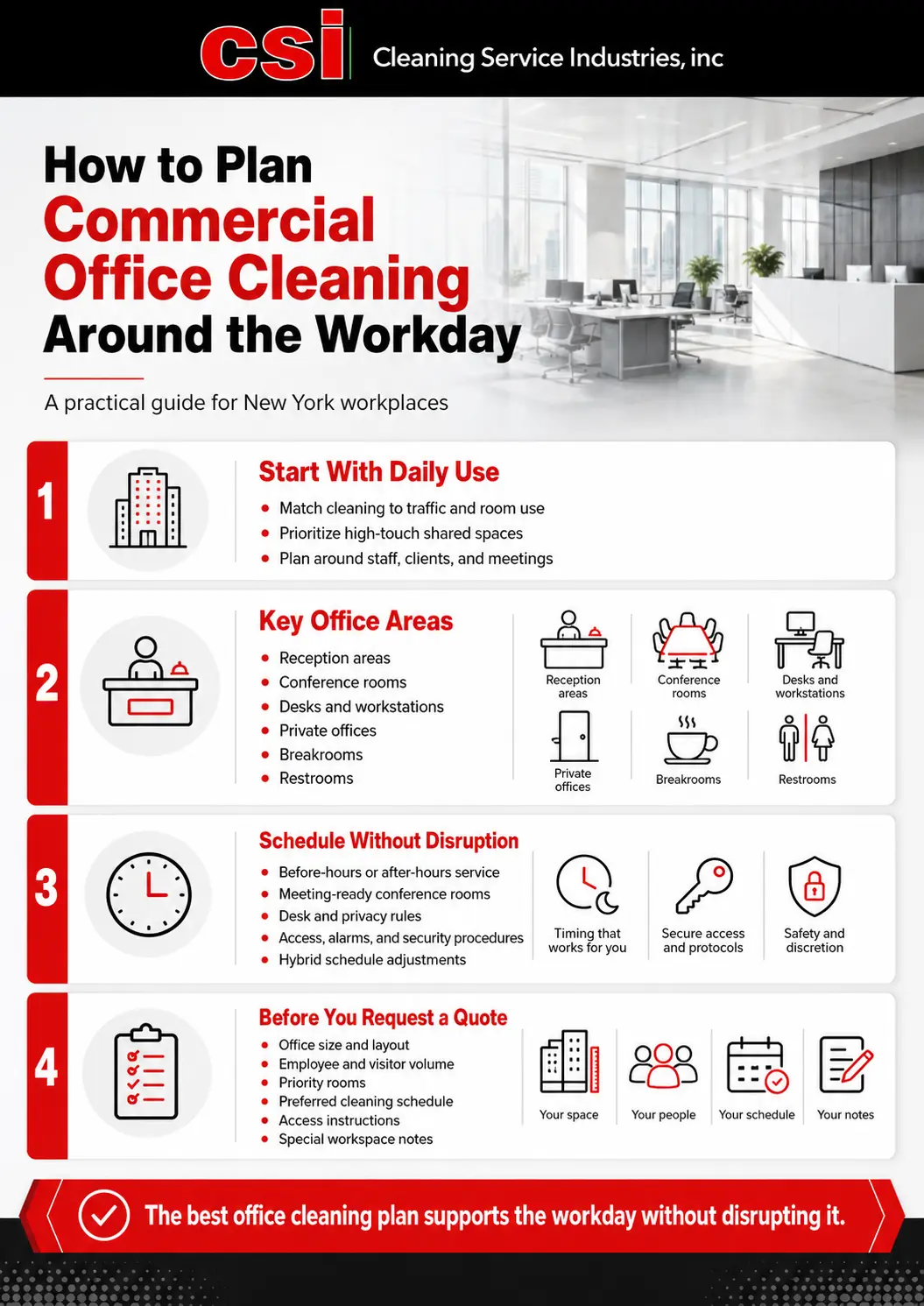
Office cleaning schedules should support the workday rather than compete with it. Some businesses need service before employees arrive, while others need after-hours cleaning after meetings, calls, and client visits end. Some offices may need a lighter daytime touch for restrooms or reception areas and fuller service after business hours. CSI Cleaning can discuss these needs before service begins so the plan matches the actual office schedule.
Timing also affects product selection and occupant comfort. EPA’s Safer Choice program helps identify products that meet EPA criteria for safer ingredients for people and the environment. In an occupied office, product use should be discussed because odors, residues, timing, and surface needs may affect how employees and visitors experience the space. This does not mean every office needs the same products, but it does mean cleaning methods should fit the setting.
A practical office cleaning schedule should also account for access. The provider may need keys, alarm instructions, elevator rules, security desk procedures, parking details, and a preferred point of contact. If the office has private rooms, executive areas, shared desks, or sensitive work areas, those instructions should be documented before work starts. Clear access planning protects the office routine and helps the cleaning team work with fewer delays.
Commercial Office Cleaning NY Priorities to Discuss First:
- Reception areas that need to look ready before visitors arrive
- Conference rooms used for client meetings, interviews, or internal planning
- Desks, shared workstations, and private offices with specific access rules
- Breakrooms that collect trash, spills, crumbs, and surface buildup
- Restrooms used by employees, clients, vendors, and candidates
- High-touch areas such as doors, counters, shared tables, and equipment zones
- After-hours access, alarms, keys, parking, elevators, and security procedures
These priorities help an office manager turn a broad cleaning request into a practical plan. They also help the provider understand which spaces carry the most business value. A reception area used daily by clients may need different attention than a low-use private office. A conference room used for interviews may need different timing than a breakroom used by staff all day.
What to Clarify for Desks, Private Offices, and Shared Rooms
Desks, private offices, and shared rooms need clear instructions because they are not neutral spaces. They may contain personal items, papers, laptops, files, office supplies, or private materials. Some businesses want trash removal and floor care near desks, while others want agreed surface cleaning when desks are cleared. CSI Cleaning should understand those expectations before service begins.
This is where office cleaning differs most from general commercial cleaning. A lobby floor or restroom counter may have straightforward cleaning expectations, but a workstation requires more care around boundaries. Private offices may also have access rules, locked doors, or timing preferences. Shared rooms, such as conference rooms and collaboration spaces, require a plan informed by meeting volume and presentation standards.
The provider should also know how the office uses space during the week. Hybrid schedules may concentrate employees on certain days, which changes restroom demand, breakroom use, trash volume, and conference room activity. Meeting-heavy days may require more attention to client-facing rooms and reception areas. A cleaning plan built around these patterns will usually work better than one based only on square footage.
How CSI Cleaning Supports Recurring Office Cleaning
CSI Cleaning brings long-standing New York commercial cleaning experience to office environments. Cleaning Service Industries, Inc. opened in the early 1950s and has served NYC commercial clients for three generations. CSI’s site states that employees receive training for different corporate environments and that employees are bonded and covered by workers’ compensation, public liability, and property damage insurance. Those details matter in offices because cleaning teams often work around desks, documents, equipment, furniture, client-facing rooms, and after-hours access points.
CSI also offers customized commercial office cleaning services tailored to the specific needs of each facility. That matters because two offices with the same square footage may need different services. One may host clients every day, while another may operate mostly as an internal administrative space. A good quote conversation should define the rooms, schedule, access rules, priority areas, and service expectations before work begins.
Request a Commercial Office Cleaning Quote
A commercial office cleaning quote should begin with how the workplace functions. CSI Cleaning should know the office location, approximate size, employee count, visitor volume, meeting room use, number of restrooms, breakroom use, preferred schedule, and access requirements. The quote should also account for areas with special instructions, such as private offices, shared desks, executive spaces, or client-facing rooms. This helps the cleaning plan support the workday rather than disrupt it.
