You walk through your office on Monday morning and notice a dark line along the baseboards, stained restroom grout, and a full wastebasket beside an empty soap dispenser. It is tempting to group everything together as poor cleaning. But some of those conditions may be missed routine tasks, while others may need work outside the regular schedule. Paying for a deep clean will not fix an ongoing problem with tasks that were already supposed to be completed.
At CSI Cleaning, we recommend starting with the agreed scope and the specific areas that are disappointing you. Separating unperformed daily tasks from cumulative grime buildup is the first step toward achieving the facility standards you pay for. The useful question is not whether the office needs “more cleaning” in general. It is what work is missing, what needs a different method, and what should happen more often. If you are in search of commercial office cleaning New York, give our team a call today.
Check the agreement before adding a new service
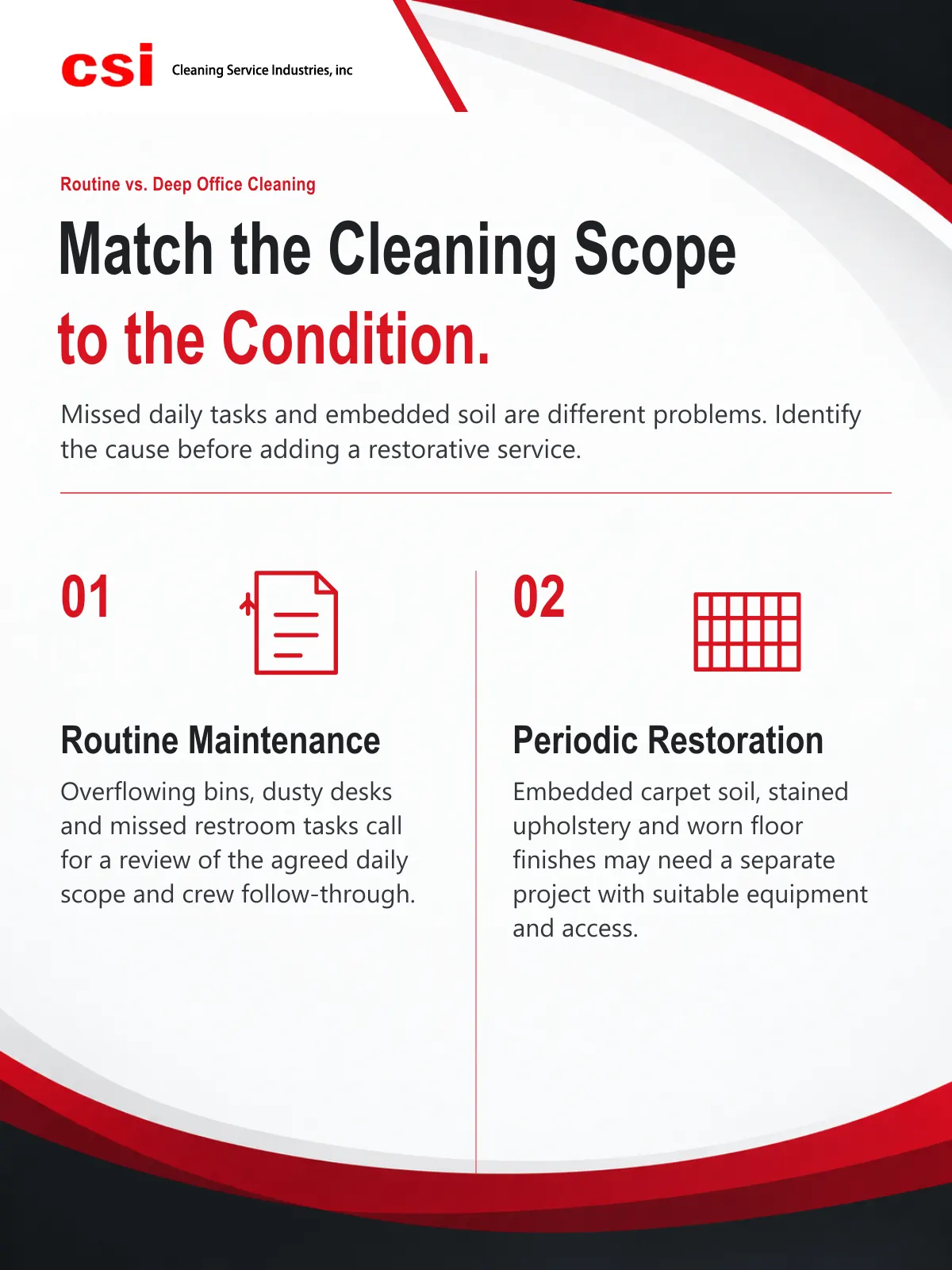
An overflowing bin is a clear concern if emptying it was included in the previous visit. An empty dispenser also deserves a direct explanation if checking and refilling it was part of the arrangement and supplies were available. Neither should be folded into a new restorative-cleaning quote. First establish whether the task was scheduled, whether the crew could access the area, and whether there was a practical obstacle to completion.
Now consider grout that remains dark after the floor is mopped. That does not prove the cleaning crew skipped mopping last night. It may need a more focused cleaning method, or the discoloration may involve staining or wear that cleaning will not completely reverse. The next step is to inspect the material and condition rather than prescribe the same aggressive chemical treatment for every floor.
For the commercial office cleaning New York businesses budget for, this distinction affects both accountability and cost. You should not pay twice for a missed task. You also should not expect a routine visit to include unpriced specialty work simply because both activities fall under the word “cleaning.” A written task list gives everyone a fair starting point.
What you notice | What to check first | Likely next discussion |
Full bins or unserviced restrooms | Was the task included, due, and accessible? | Correct missed work or revise the frequency. |
Soil along floor edges | Is edge cleaning in the scope, and how often? | Improve routine attention or arrange periodic detailed work. |
Stained fabric chairs | What caused the marks, and what care does the fabric allow? | Discuss upholstery cleaning and realistic limits. |
Carpet traffic lanes remain dark | What routine and periodic care has been performed? | Review the carpet maintenance plan before assuming replacement. |
Define what a deep clean will change
“Deep cleaning” is not a complete scope of work. It could mean detailing neglected edges, cleaning upholstered seating, shampooing carpet, or carrying out appropriate floor maintenance. Those services involve different surfaces, access needs, and expectations. A proposal should name the areas and tasks rather than rely on the label to explain the price.
Suppose the conference chairs have visible marks on the seats, but the desks, wastebaskets, and restrooms are consistently maintained. Buying a general office-wide package may be less useful than arranging suitable upholstery cleaning for those chairs. Conversely, if multiple routine tasks are being missed each week, a one-time visit may temporarily improve appearances while leaving the underlying schedule or supervision problem unchanged. We want the selected work to solve the condition you are actually seeing.
Before approving additional work, clarify:
- Which rooms, surfaces, and items are included, and which are excluded.
- Whether furniture must move, who moves it, and which areas must remain accessible.
- Any drying or return-to-use requirements for the selected treatment.
- Which marks may be permanent and how the result will be checked.
Match the schedule to how the office is used
A pantry used by a handful of people does not face the same workload as one beside a busy training room. If attendance or visitor traffic has increased since the cleaning arrangement began, the original frequency may no longer fit. That is a different problem from a crew failing to complete an adequate scope. Review both before deciding who or what needs to change.
Periodic work also needs time of its own. Carpet cleaning, upholstery care, or floor finishing may require access and drying arrangements that a brief routine visit does not provide. Schedule around the office's actual use rather than assume every specialty task must happen on the same timetable. The material manufacturer's care requirements should guide the method, especially when an unfamiliar finish or fabric is involved.
CSI provides general office cleaning along with services such as carpet shampooing, carpet spotting, and upholstery shampooing. We can discuss which of those services fits the conditions you identify. The scope should remain specific enough that you can walk the same areas afterward and see whether the agreed work was completed.
Fix the missed work and address the buildup separately
If daily tasks are being missed, correct that service problem first. If the routine work is being completed but particular surfaces still need more attention, arrange targeted periodic cleaning with a clear scope and realistic expectations. Some offices need both, but they should not be charged for one vague solution to two different problems.
Contact CSI Cleaning with your current cleaning schedule and a short list of the areas that are not meeting expectations. We can discuss the routine work, the specialty services that may help, and a scope you can actually review. Start with the full bins, the dark grout, or the stained chairs you are looking at, not an undefined request to make the office pristine.
