An office can look fully operational at 6 p.m. and completely different by 10 p.m. Conference rooms become catering areas, reception desks become guest check-in points, restrooms see another peak-use period, and pantries absorb coffee, wine, snacks, and late departures. The next morning, employees focus on the condition of the reset rather than on the success of the event.
For an office cleaning service NYC schedule, after-hours events change cleaning from a standard nightly routine into an event-based reset. The issue is not only heavier use, but also use that occurs during the same hours as cleaning, security access, elevator movement, and building rules, which may already be constrained. A recurring plan that works on ordinary weekdays may need later timing, clearer sequencing, and a more specific definition of what must be restored before the next business day begins.
After-hours Event Timing and Cleaning Schedule Changes
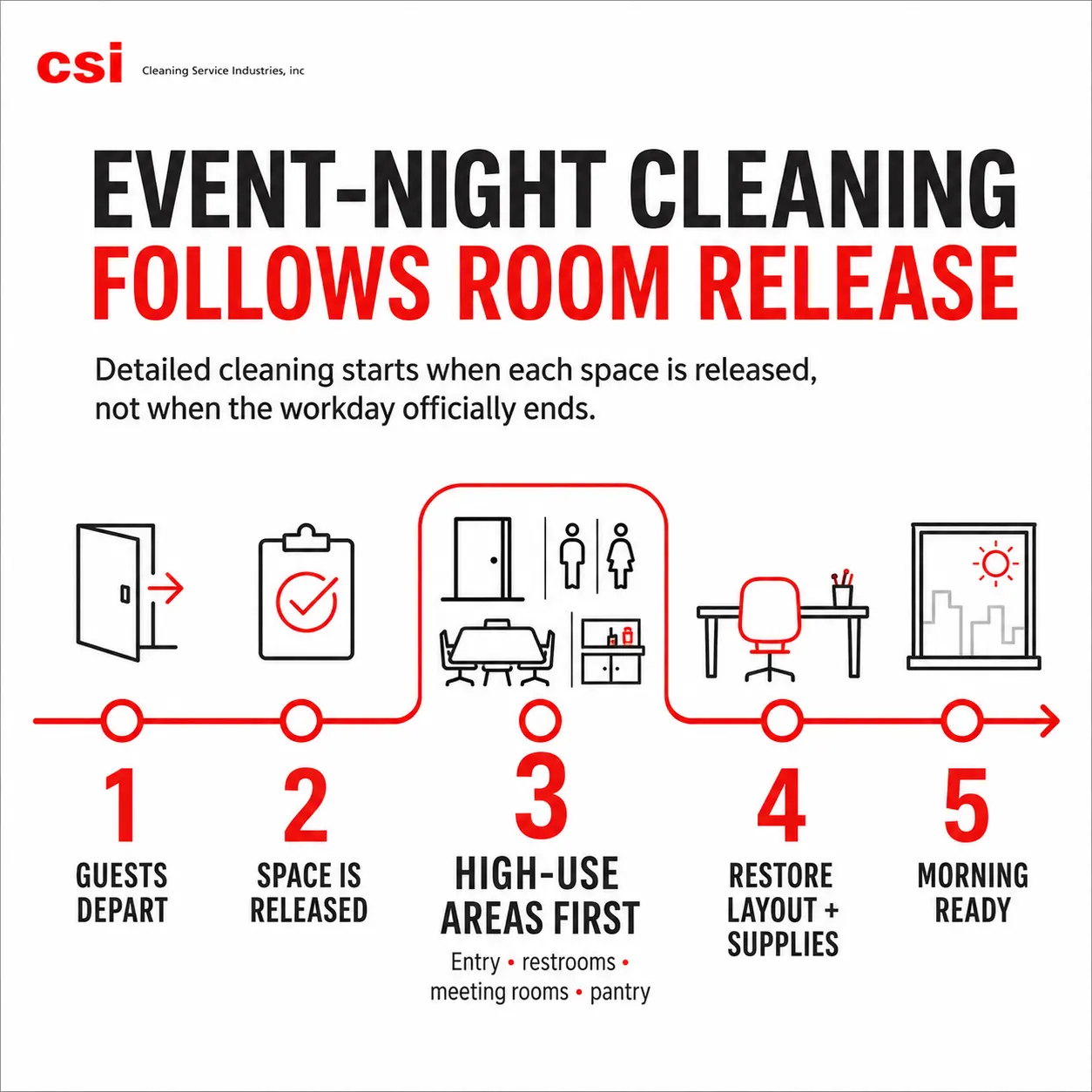
Evening events turn active office areas into occupied spaces during normal cleaning windows. A conference room that is usually ready for vacuuming at 6 p.m. may still contain guests, catering equipment, presentation materials, and employees managing the event. Cleaning therefore has to follow actual room release times rather than the official end of the workday.
Event condition | Cleaning schedule adjustment |
Guests remain after normal business hours | Delay detailed room cleaning until final departure |
Catering or beverage service is used | Add same-night pantry, floor, and waste resets |
Employees arrive early the next morning | Prioritize entry areas, restrooms, meeting rooms, and shared work areas |
Security limits access after a set hour | Sequence cleaning around approved floors, elevators, and locked areas |
Cleaning windows change because an event keeps rooms active during hours that may already be assigned to routine custodial work. If crews arrive while guests remain, they may be limited to perimeter tasks, waste staging, or work on unaffected floors rather than full restoration. The conflict is not unusual, because facilities programs often organize service by use level, location, and time of day. Columbia University Irving Medical Center Facilities Management notes that some classrooms and restrooms are cleaned on weekdays between 8 a.m. and 4 p.m., depending on location and usage. In contrast, detailed cleaning of offices, classrooms, and restrooms occurs Monday through Friday between 4 p.m. and 12:30 a.m. Its published routines also include weekday trash removal, liners replaced as needed, daily sweeping or dry mopping of hard floors, weekly damp mopping, and weekly spot cleaning of marks on doors, entrances, and switch plates.
Those categories become more urgent after an office event because food, beverage service, crowd movement, and late restroom use can compress several days of normal wear into one evening. For event-based sequencing, the point is not to copy an institutional schedule exactly, but to recognize that task timing must follow actual occupancy and use. The operational takeaway is simple: event nights need a release-based cleaning plan, not a clock-based assumption.
Post-event Cleaning Priorities before the Next Workday
After an evening presentation, client reception, training session, or internal celebration, cleaning priorities shift from routine upkeep to workplace recovery. Food service areas, restrooms, conference rooms, elevator lobbies, reception desks, and shared pantries usually need more attention than private offices because they absorb the highest concentration of event use. The first goal is to remove conditions that affect sanitation, odor, slip risk, and morning usability before crews move into lower-priority detail work.
- Remove event trash, replace liners, and separate recyclables where required.
- Refresh restrooms, including fixtures, dispensers, mirrors, partitions, and floors.
- Clean catering zones, beverage stations, conference tables, and serving surfaces.
- Spot-clean doors, switches, elevator buttons, reception counters, and shared equipment.
- Restore furniture layouts, signage, entry areas, and supply placement.
Waste and floor care become more time-sensitive when food, beverages, and late traffic are involved. A pantry spill that can wait during a normal afternoon may become a safety or odor issue if it remains overnight. The most visible spaces should be reset first because employees and visitors will judge the office by entry paths, meeting rooms, restrooms, and shared areas before they notice lower-traffic details.
Recurring Cleaning Plan Adjustments for Frequent Events
A recurring plan should reflect real occupancy patterns rather than assuming the office becomes inactive when desks empty. Frequent evening programs usually require a separate event-reset layer rather than simply stretching the ordinary nightly scope. That layer should clarify which spaces were used, when guests left, whether catering was present, which restrooms were active, and whether building access restrictions affected the route.
- Add event dates, room names, expected attendance, and end times to the work order.
- Separate standard nightly duties from event reset duties.
- Confirm access needs for freight elevators, locked suites, pantries, and amenity areas.
- Define morning readiness by space, including boardrooms, pantries, restrooms, and corridors.
Sequencing is the main operational change. Event reset tasks should come before routine detailing in affected zones because debris, spills, furniture movement, and restroom demand change what the office needs first. A predictable, recurring plan can remain in place, but event nights require modified routing, clearer handoff notes, and a morning-readiness standard tied to how employees and visitors will encounter the space.
Plan the Reset around the Event, Not the Clock
After-hours events require cleaning plans to follow the building’s actual evening occupancy pattern. Service timing, task sequencing, access constraints, waste removal, restroom recovery, floor care, touchpoints, and furniture reset all affect whether the office is ready the next morning. Offices that host evening programs should document event details in the recurring cleaning scope so the workplace can return to normal operations without a visible after-event gap.
Related Reading
- How Office Cleaning Improves Employee Productivity and Retention
- NYC Winter Floors: What Snow Tracks into Your Office, What It Damages, and How to Stop It
- Why an Office Cleaning Service in NYC Is a Business Requirement, Not a Preference
- Delivering Health, Productivity, and Peace of Mind with Office Cleaning Service New York
- How Office Cleaning Changes During a Heatwave (And Why It Should)
